Embedding Physiological Responsiveness into Game World Dynamics
BioTerrarium · Unity, Apple Watch heart rate & HRV · within subjects study, n = 24
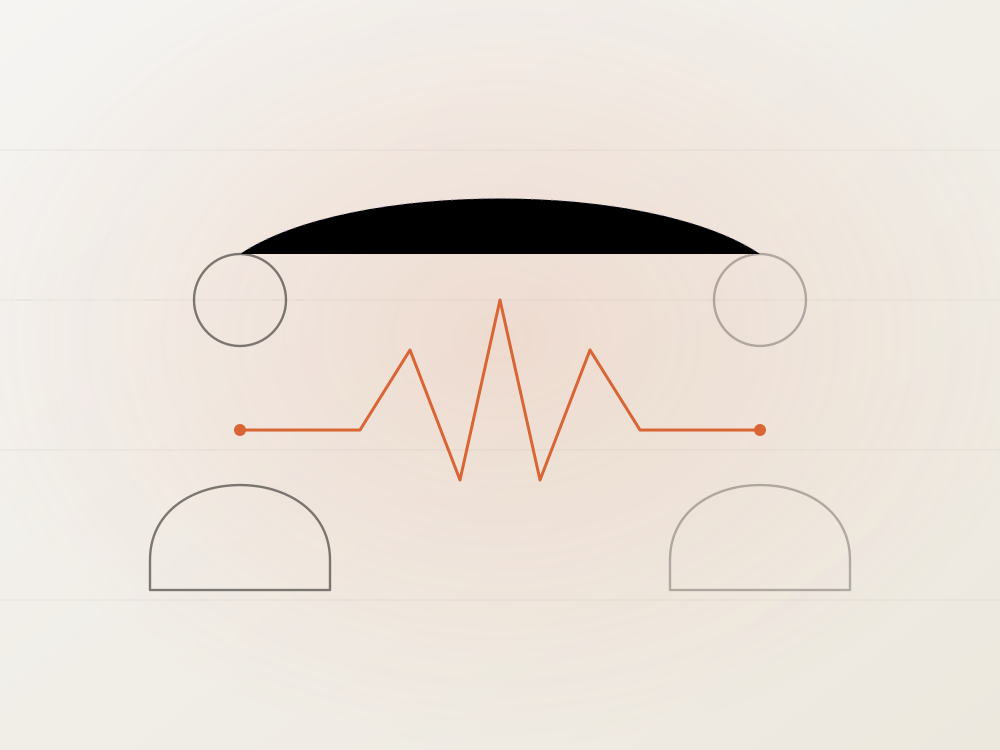
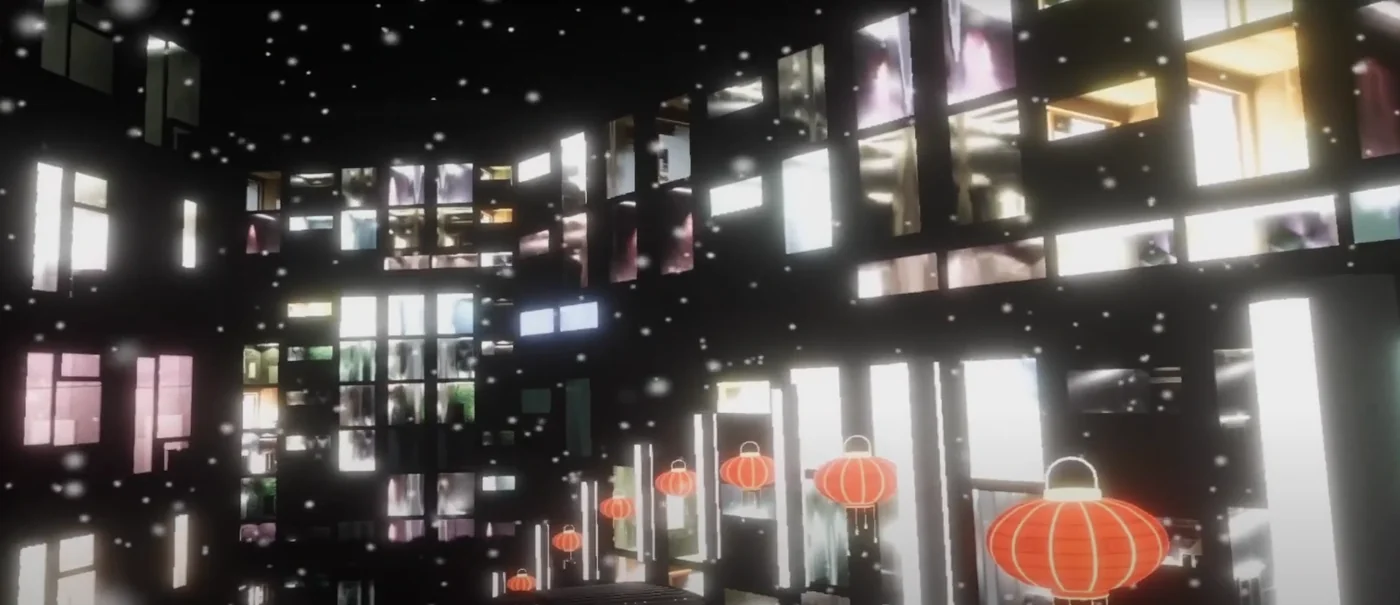
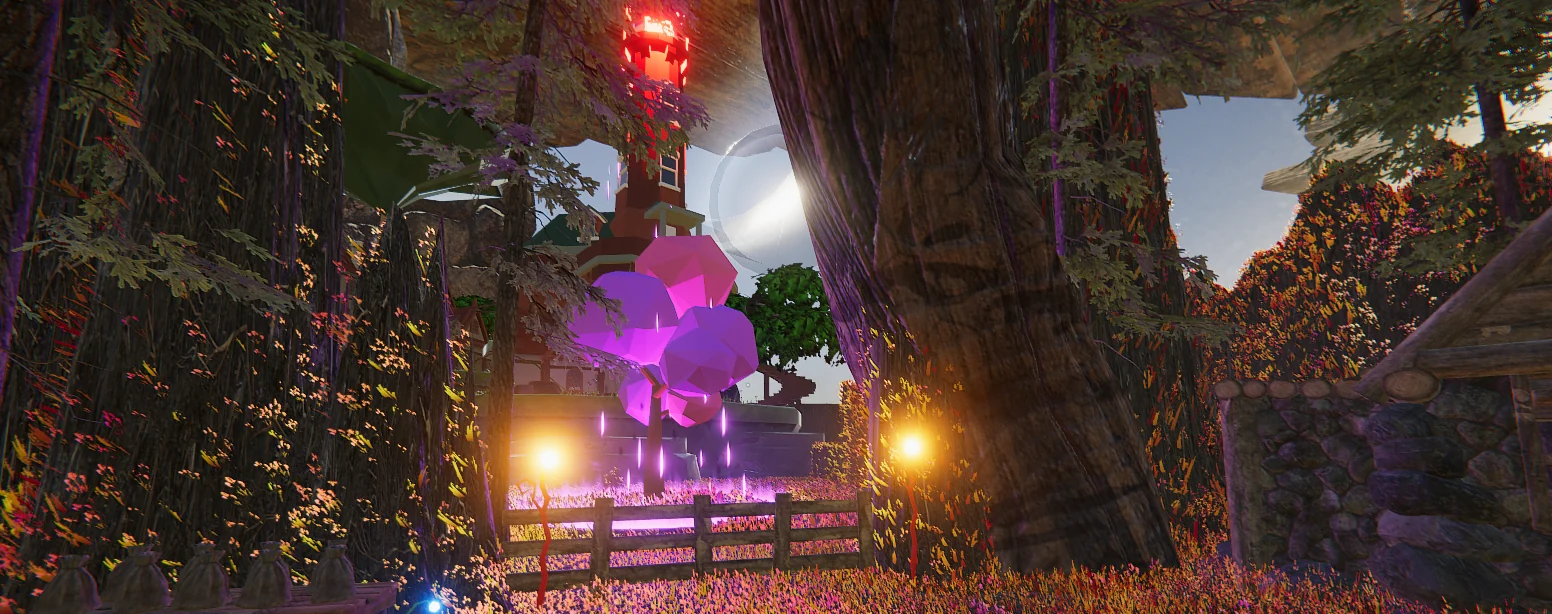
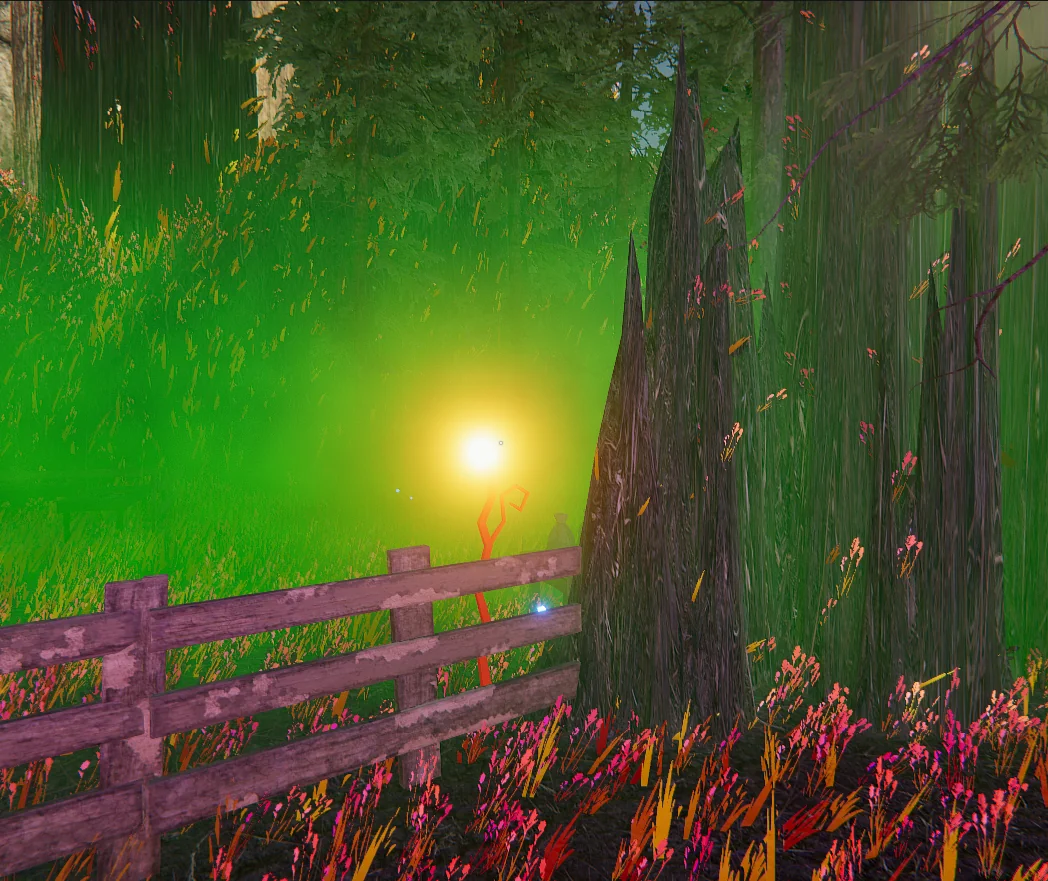
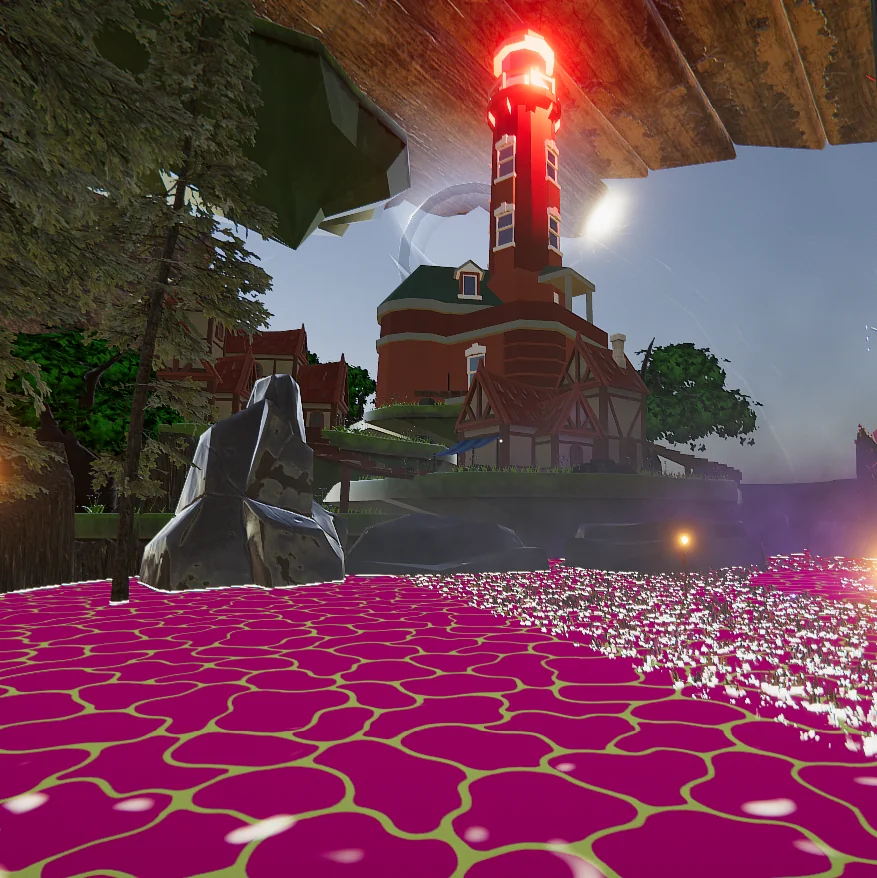
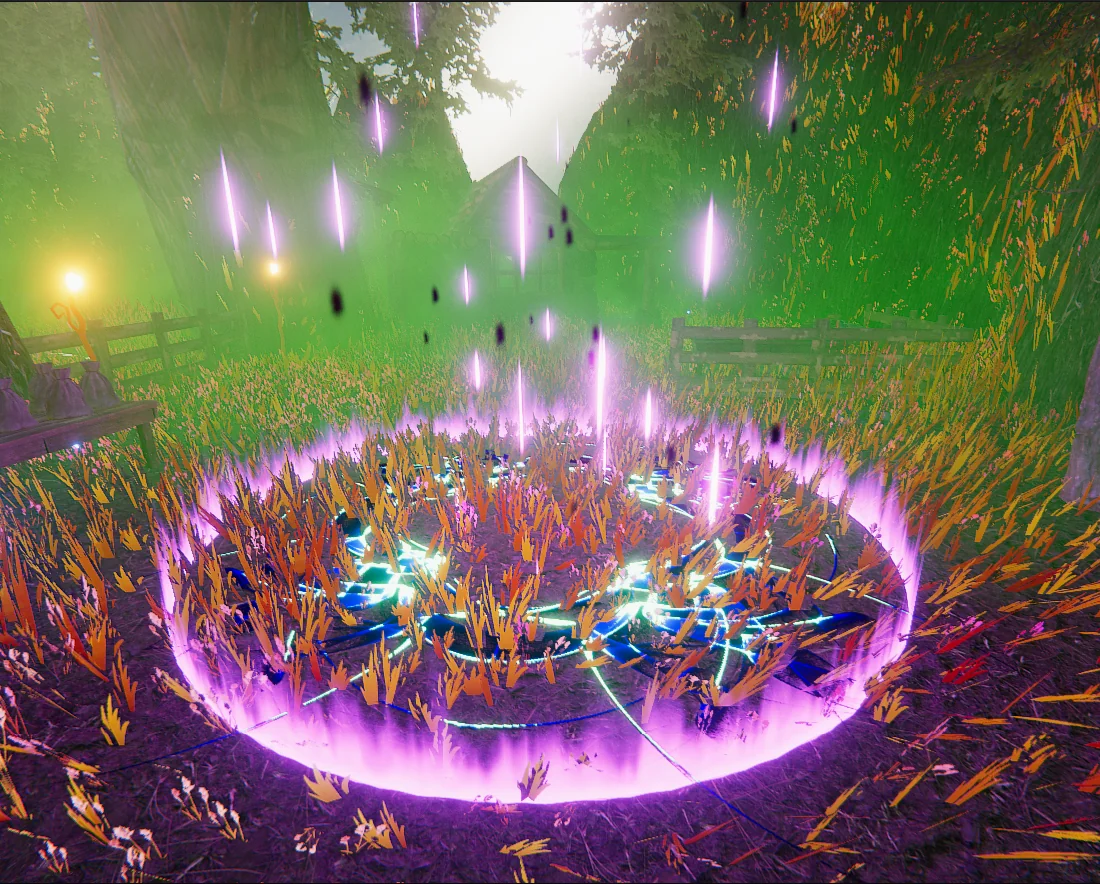
Most games ask a lot of a player's nervous system and give almost nothing back. I wanted to build a small world that pays attention to the body instead of asking the player to pay attention to a meter. BioTerrarium is a closed glass ecosystem, a kind of living terrarium, where fog, vegetation, and light respond in real time to the player's own heart rate and heart rate variability. When the player is calm, the terrarium clears and grows. When stress builds, the world fogs over, overgrows, and the light desaturates. Nothing is ever shown as a number, the environment simply reflects the state of the body back to the player.
Watch it in action
How it works
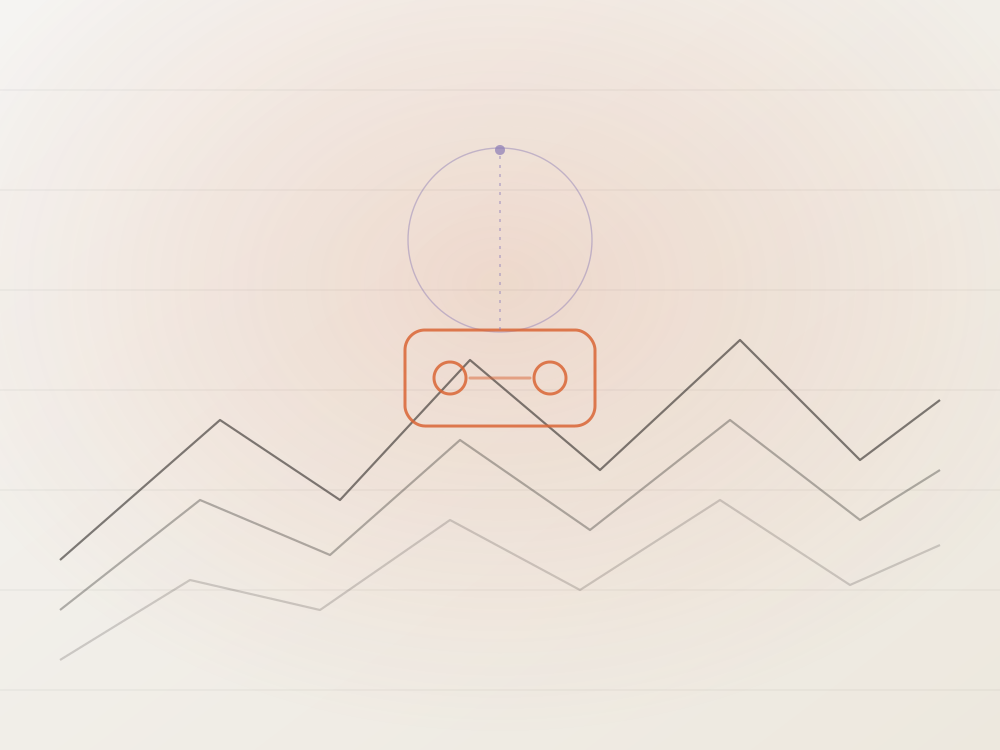
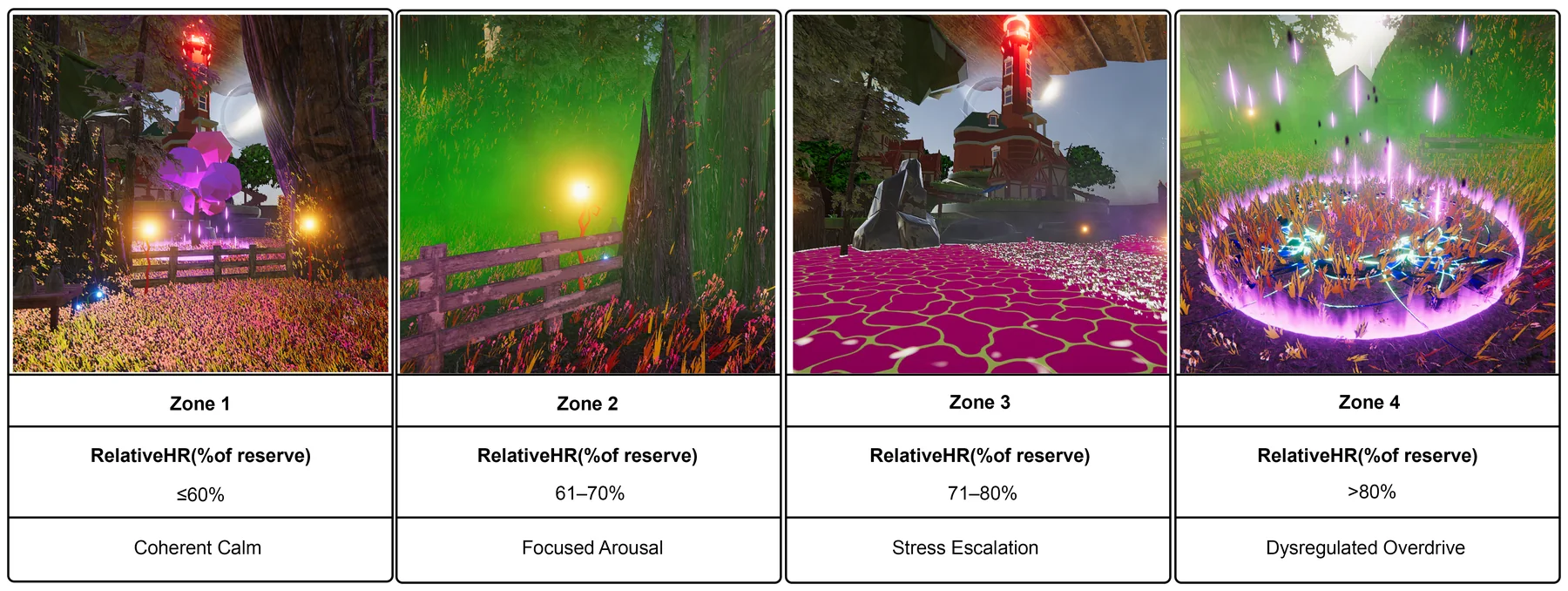
The system reads heart rate from an Apple Watch Series 7 over Bluetooth and Apple HealthKit, bridges it through a small Swift app, and streams it into Unity over a WebSocket with under 100 milliseconds of latency. A two minute resting baseline sets a personal reference for each player, and every reading afterward is normalized against that baseline and sorted into one of four zones, from Coherent Calm through Focused Arousal and Stress Escalation to Dysregulated Overdrive. Each zone maps to fog density, vegetation growth, light diffusion, and a shader based blur, updated ten times a second so the world always feels like it is breathing along with the player.
More from the environment
What it produced
I ran a within subjects study with 24 participants, comparing this bioadaptive terrarium against an identical environment that changed on a fixed schedule instead of responding to the body. Players in the bioadaptive condition had a lower average heart rate, noticeably higher heart rate variability, and spent close to 80 percent of their playtime in the two calmest zones. Afterward they also reported more mindful attention, more positive affect, less negative affect, and deeper flow. In interviews, people described the terrarium as something that was breathing back at them and that calmed when they calmed.
Where it stands
I submitted this work to ACM SIGGRAPH 2026. It went through a full round of reviewer feedback and revisions, and in the end the paper was not accepted. I still think the system and the study hold up, and I am looking at where this line of research fits next.